On this page
The Bottom Line
If you have ever been the insertive partner during anal sex, you may have felt it: an initial ring of resistance, a bit of muscular grip, and then—somewhere further in—a distinct change. Less squeeze. More room. A different angle.
Somebody, at some point, decided to call that the “second hole.” The phrase spread through group chats, forums and a truly impressive amount of internet confidence.
So let's settle it: there is no second hole. There is, however, a lot of anatomy.
The sensation people describe is real. The explanation is just more interesting than a secret trapdoor. It most plausibly comes from traveling through a short, muscular anal canal—ringed by two different sphincters and slung by a pelvic-floor muscle—and then entering the rectum, which is a roomier, more distensible space.
This article walks that path from the outside in. It's for tops who want to know what they're feeling, bottoms who want a better vocabulary for their own body, and anyone who has ever had to fact-check a friend at brunch.
Key Facts
- “Second hole” is a colloquial sexual term, not an anatomical structure or a medical diagnosis.
- There is one anal opening. What changes is the tissue, muscle and space behind it.
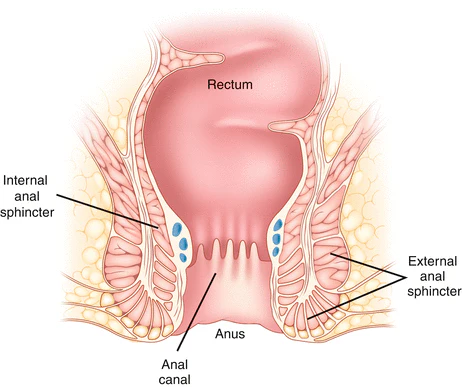
- The internal anal sphincter is involuntary smooth muscle and supplies much of the anal canal's resting tone.
- The external anal sphincter is voluntary skeletal muscle—the one you consciously squeeze.
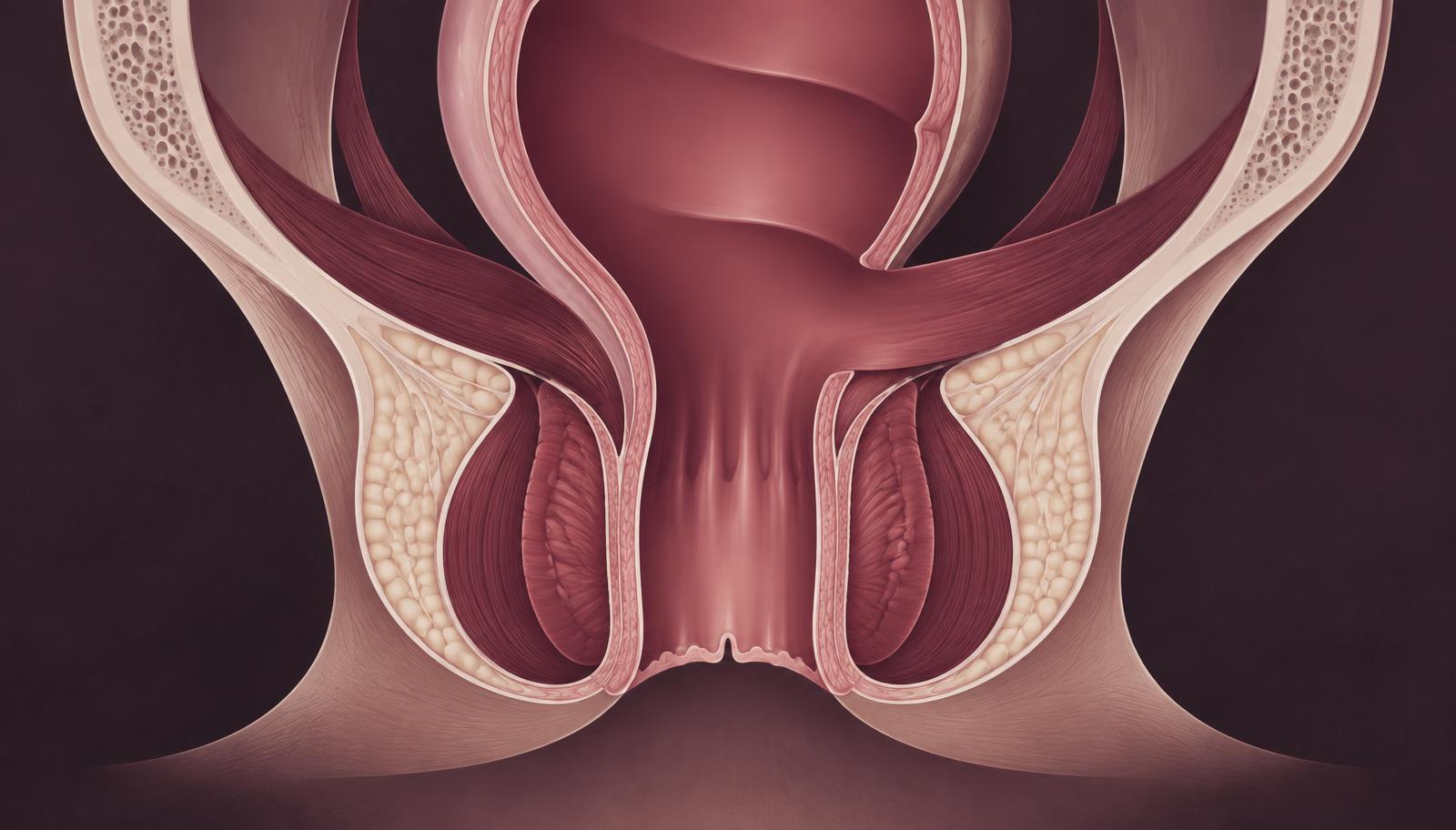
- The puborectalis forms a sling around the anorectal junction and helps create the anorectal angle.
- The rectum is longer and far more distensible than the anal canal.
- No study has proven that the sensation maps to one single structure. This is the most anatomically plausible interpretation, not established experimental fact.
Every body is built on the same general plan and still feels different in practice.
So Where Is the “Second Hole”?
Start outside and travel inward. The route is short, but a lot happens along it.
- Outside — perianal skin, richly supplied with sensory nerves.
- Anal opening — the single external opening. There is only one.
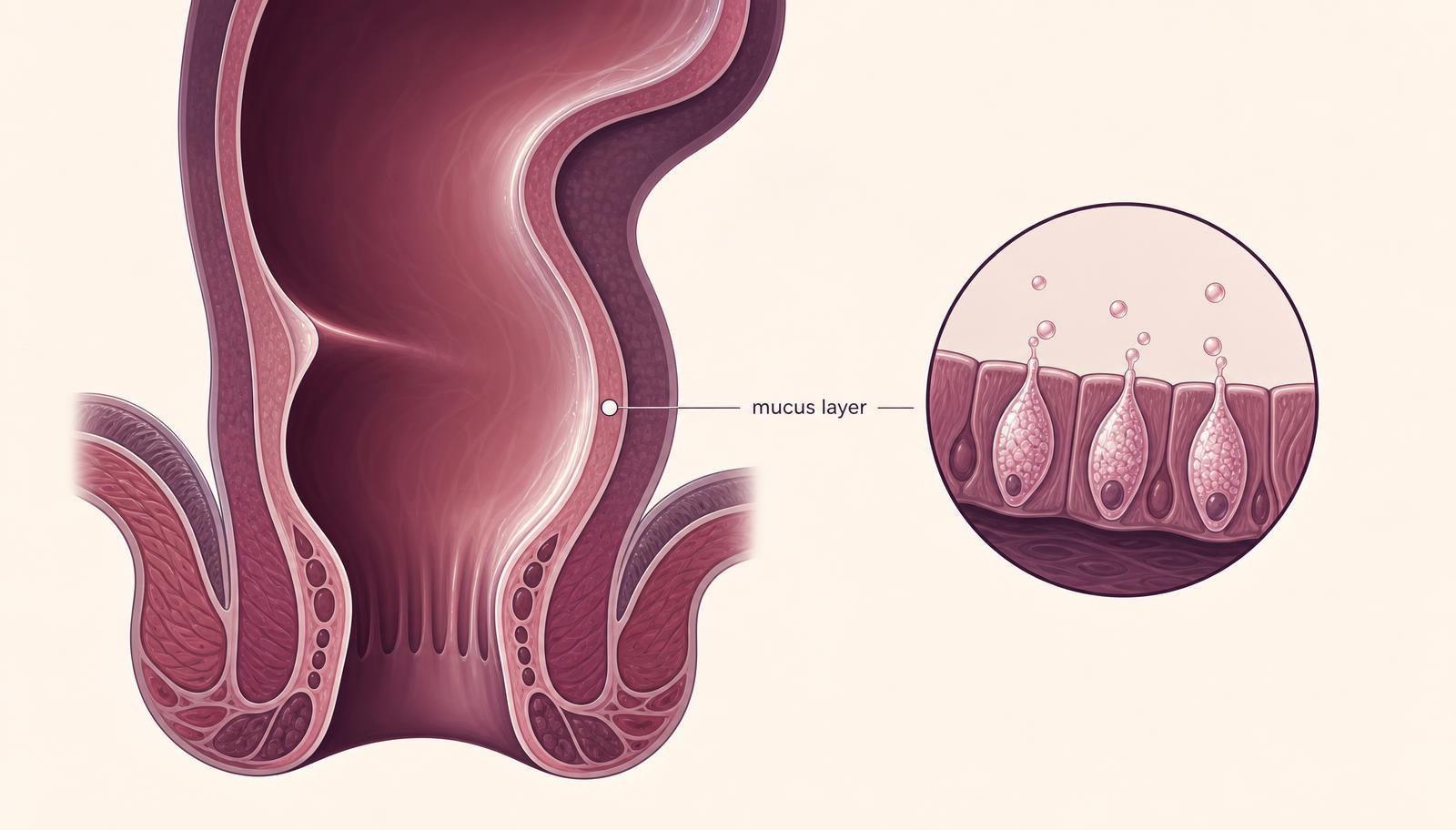
- Anal canal — a short, muscular passage surrounded by the internal and external anal sphincters.
- Anorectal ring / puborectalis — the muscular complex at the top of the anal canal that helps create the anorectal angle.
- Rectum — a more capacious, distensible space that follows the curve of the sacrum.
Nothing in that list is a doorway. It's a change in diameter, muscle tone and angle happening over a few centimeters.
Meet the Muscles
Four structures do most of the work in this conversation. They are not interchangeable, and none of them is a hole.
Internal anal sphincter
Involuntary smooth muscle, a continuation of the bowel's own muscle layer. It provides much of the anal canal's resting tone, which means it is holding pressure even when you are not thinking about it. You cannot consciously relax it on command the way you can the external sphincter—it responds to reflexes, relaxation and time.
External anal sphincter
Voluntary skeletal muscle. This is the one you squeeze when you clench. It is under conscious control, which is why breathing, position and genuinely wanting to be there change how it behaves. Tension here is often the thing people are actually fighting at the entrance.
Puborectalis
A pelvic-floor muscle that loops around the anorectal junction like a sling. Its tone helps create the anorectal angle—a bend that supports continence. Its relaxation and position change what an insertive partner encounters at the top of the canal.
Rectum
Not a muscle so much as a space: a more distensible chamber designed to accommodate contents and stretch as it fills. Roughly 12–15 cm long, following pelvic curves rather than running straight.
The Anal Coach
“Your ass isn't just a hole. It's an entire muscular system.”
Anal Canal vs. Rectum
These two are frequently used as synonyms in casual conversation. Anatomically, they are doing very different jobs.
| Anal canal | Rectum | |
|---|---|---|
| Character | Muscular, continence-focused | Capacious, storage-focused |
| Width | Relatively narrow | More distensible |
| Length | Approximately 4 cm (surgical anal canal) | Approximately 12–15 cm |
| Shape | Short and straight | Follows the pelvic curves |
| Main job | Closing and controlling | Accommodating and stretching |
Between them sits the anorectal junction. This change in anatomy may explain the sensation of suddenly having more room.
Scroll the table horizontally to see all columns.
Go from a short muscular tube into a chamber built to expand, and the difference in resistance is not subtle. It doesn't need a second opening to feel like something changed—because something did.
What a Top May Feel
- Entrance — perianal skin and the external sphincter; the most sensation-dense, most consciously guarded part of the trip.
- Muscular pressure — the anal canal, gripped by internal and external sphincter tone.
- Change in resistance and angle — approaching the anorectal ring and the puborectalis sling.
- More space — entry into the more distensible rectum.
It's also worth saying plainly: there is no direct research proving that this specific sexual sensation maps to one particular structure. What we have is well-described anatomy and a very consistent description from people having sex. Putting those together is reasonable. Calling it settled science is not.
The Anal Coach Fact Check
Myth
The “second hole” is the internal anal sphincter.
Fact
The internal sphincter contributes to resistance, but what people describe as the “second hole” is more likely the transition through the upper anal canal and anorectal junction into the rectum. It's a combination—internal sphincter, external sphincter, upper anal canal, anorectal ring, puborectalis and the anorectal angle—not a single muscle acting as a gate.
This distinction matters more than it sounds. Treating one muscle as a door encourages people to think of anal sex as a lock to be picked. It isn't. It's a system that relaxes, or doesn't.
For the record
“There aren't six secret booty doors back there.”
Why Two Partners Describe the Same Body Differently
A bottom might feel pressure, fullness and, at a certain depth, a deeper sensation that is harder to localize. A top might feel grip, then release. Both descriptions can be accurate at once, because they are describing opposite sides of the same anatomy.
- The anal canal is densely innervated and sensitive to touch, temperature and stretch; the rectum responds more to stretch and distension than to fine touch.
- Relaxation of the external sphincter is partly voluntary—so comfort, nerves and trust genuinely change the physical experience.
- Position changes the anorectal angle, which changes what the insertive partner encounters.
- Lubricant reduces friction but does not relax muscle. Those are two different problems with two different solutions.
Don't Try to “Break Through” It
The anorectal region is well supplied with nerves for a reason. Pain that feels sharp, tearing or escalating is your body reporting a problem, not a door that needs more shoulder.
The Anal Coach Bottom Line
There is no anatomical “second hole.”
What tops describe is most likely the sensation created by passing through the muscular anal canal, approaching the anorectal ring and puborectalis complex, and entering the more spacious rectum.
ONE HOLE. SEVERAL MUSCLES. A WHOLE LOT OF ANATOMY. 🍑
When to Seek Medical Care
Anal sex should not leave you injured. Get medical care for any of the following after receptive anal penetration:
- Significant or persistent bleeding
- Severe or escalating rectal or abdominal pain
- Pain that does not settle within a day or two
- Fever, chills or feeling faint
- Inability to control gas or stool
- A retained object
- New discharge, sores or symptoms that concern you
Clinicians see this. You are allowed to describe exactly what happened without editing it for their comfort.
Frequently Asked Questions
Scholarly Sources & References
The anatomy below is well described in the clinical literature. The sexual interpretation of that anatomy is ours, offered as the most plausible reading rather than a proven finding.
- 1.Kang HS, et al. Anatomy, Abdomen and Pelvis: Anal Canal. StatPearls. NCBI Bookshelf. Read on NCBI Bookshelf
- 2.Internal Anal Sphincterotomy. StatPearls. NCBI Bookshelf. Read on NCBI Bookshelf
- 3.Fecal Incontinence. StatPearls. NCBI Bookshelf. Read on NCBI Bookshelf
- 4.Kim JH, et al. Essential Anatomy of the Anorectum for Colorectal Surgeons Focused on Gross Anatomy and Histologic Findings. Annals of Coloproctology. Read on PMC
- 5.Steele SR, et al., editors. The ASCRS Textbook of Colon and Rectal Surgery. American Society of Colon and Rectal Surgeons. View at ASCRS
- 6.Hoffman BL, et al. Pleasurable and Problematic Receptive Anal Intercourse and Diseases of the Colon, Rectum and Anus. Read on PMC
- 7.Systematic review of receptive anal intercourse experiences. BMJ Public Health. View at BMJ Public Health