On this page
- The Bottom Line
- Key Facts
- First: What Do We Mean by “Creaming”?
- Your Rectum and Your Anus Are Not the Same Thing
- Now Meet the Star of the Show: The Goblet Cell
- But Mucus Is More Complicated Than Slime
- Your Rectum Is Already Covered in Mucus
- So Why Does the Rectum Make Mucus?
- There's Another Player: Your Anal Glands
- So…Is Creaming Just Rectal Mucus?
- But Can Rectal Mucus Actually Lubricate?
- Okay, Then Why Do Some Bottoms Seem to Cream More?
- When “Creaming” May Actually Be a Symptom
- So…Where Does Creaming Come From?
- 🍑 The Bottom Line
- When to Seek Medical Care
- Research & references
The Bottom Line
You're having sex.
Things are going well.
There's lube involved—but at some point you notice something interesting. It is wetter than it was before. Maybe a lot wetter.
Some bottoms call it “creaming.” Some people describe themselves as naturally wet or “self-lubricating.” Others notice a clear, cloudy, slippery, or whitish substance during or after receptive anal sex and have absolutely no idea where it came from.
So naturally, we have a question: is your butt actually making this stuff?
Well…kind of.
The human rectum and anal canal contain several structures capable of producing mucus and other secretions. Scientists have been studying intestinal mucus for decades, and we know quite a bit about the cells that produce it, what that mucus is made of, and why your body needs it.
What we don't know nearly as well is exactly what happens to those secretions during anal sex. So before we talk about whether stimulation can make someone “cream,” we need to understand the anatomy.
Welcome to Creaming 101. And yes, there will be goblet cells.
Key Facts
- “Creaming” is a community term, not a medical one.
- Your rectum produces mucus continuously—sex is not the reason it exists.
- Goblet cells in colorectal tissue make mucins, including MUC2.
- The anal canal also contains anal glands with mucus-secreting cells.
- Fluid noticed during sex may also include lubricant, semen, saliva, or residual douching water.
- Rectal mucus is not established as sufficient lubrication for receptive anal intercourse. Keep the lube.
First: What Do We Mean by “Creaming”?
“Creaming” is not a medical term.
For this series, we're using creaming to describe noticeable wetness or mucus-like fluid that some people experience during receptive anal stimulation or anal sex.
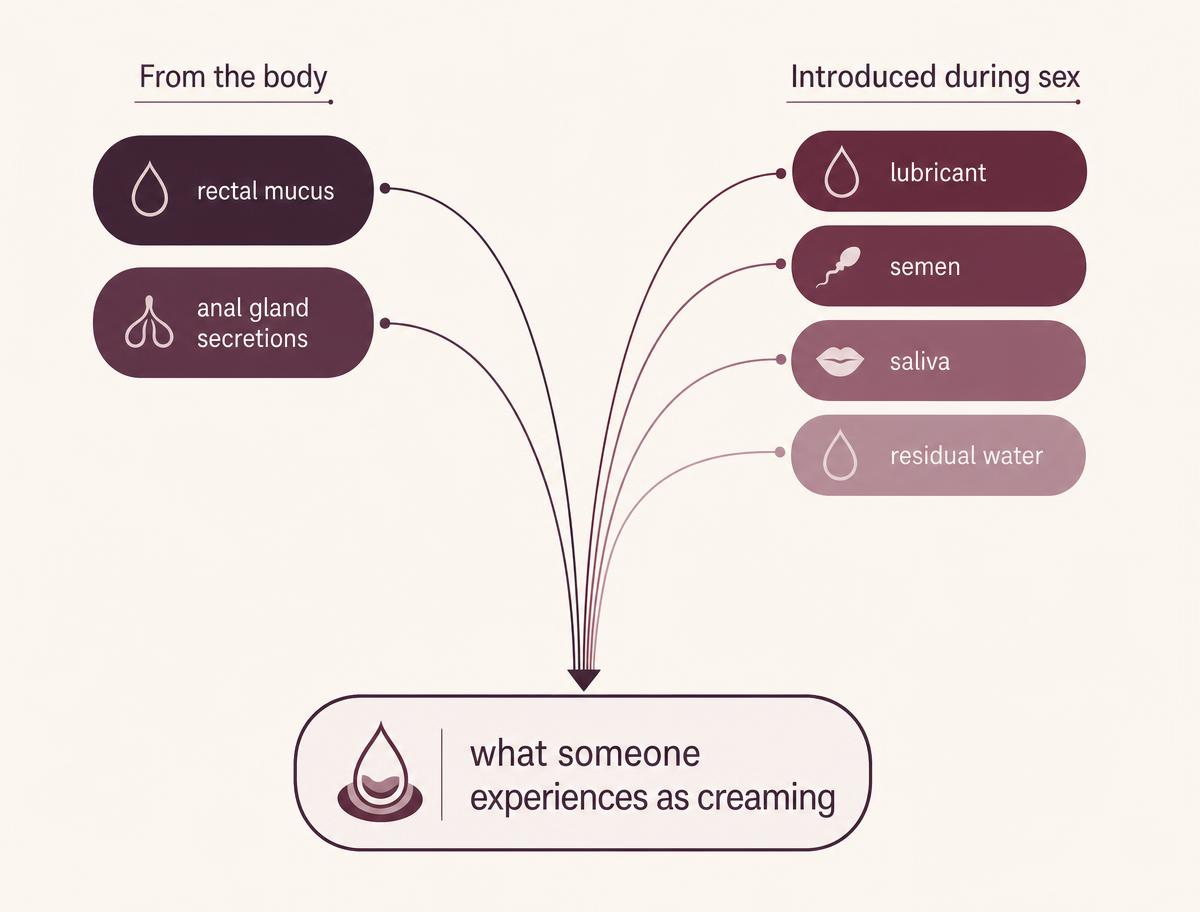
That distinction matters because what you see during sex isn't necessarily one single bodily secretion. What someone calls “creaming” might contain:
- naturally produced rectal mucus
- mucus or secretions originating around the anal canal
- sexual lubricant
- semen
- saliva
- residual water after douching
- or some combination of those fluids
So when we talk about the biology of creaming, we're specifically asking: what fluids can the anorectal area itself produce, and where do they come from?
And there is a surprisingly good answer.
Your Rectum and Your Anus Are Not the Same Thing
We casually call the entire area “the ass,” but anatomically there's a lot going on down there.
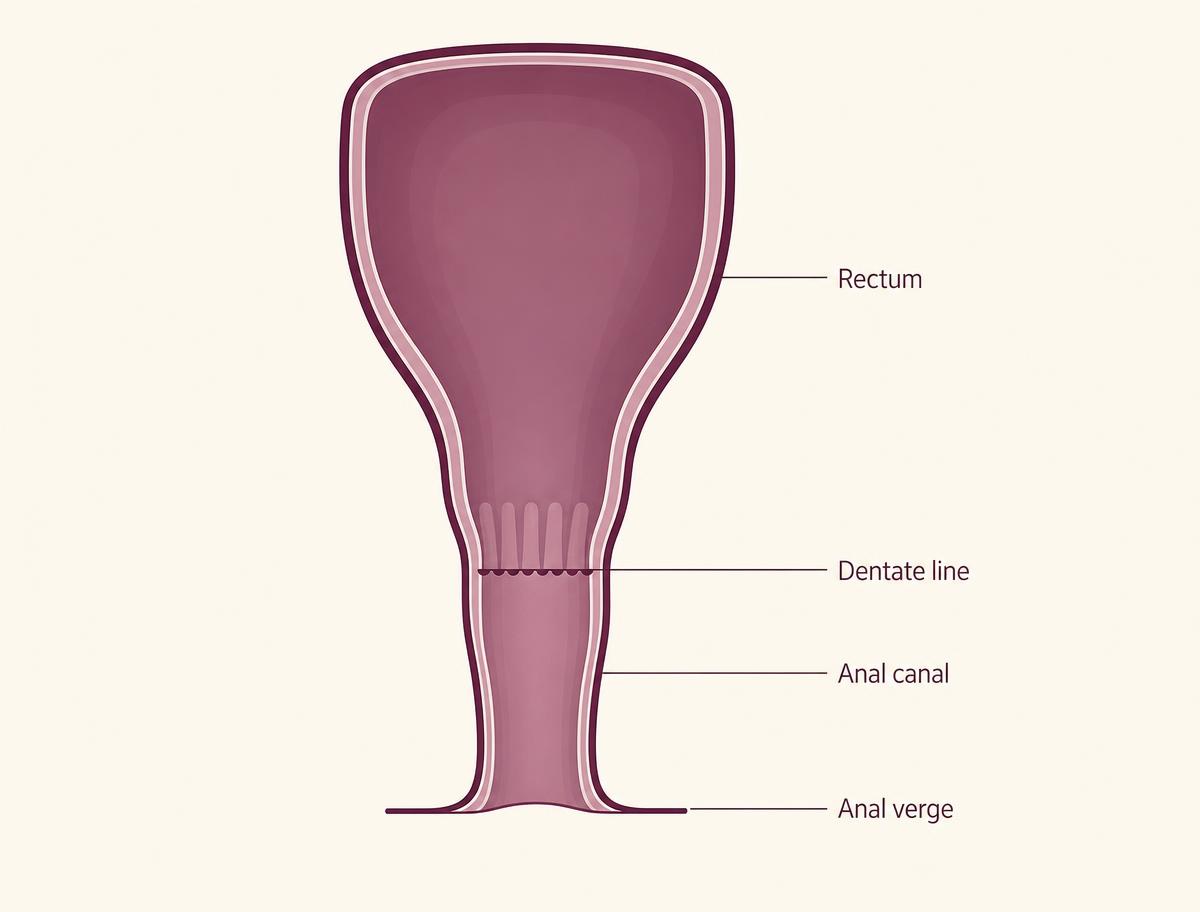
The rectum is the final portion of the large intestine. One of its major jobs is temporarily storing stool before a bowel movement.
Below the rectum is the anal canal, the short terminal portion of the gastrointestinal tract leading to the outside of the body.
And the tissue lining these structures changes as you travel downward. That turns out to be extremely important when we're talking about mucus.
Meet the Dentate Line
There is an anatomical landmark inside the anal canal called the dentate line, sometimes called the pectinate line. You can't see it from the outside, but anatomically it is an important dividing point.
Above and around this region, you encounter intestinal-type and transitional tissues. Below it, the lining increasingly becomes stratified squamous epithelium, eventually transitioning into the skin surrounding the anus.
The dentate line also corresponds with important differences in nerve supply, blood vessels and lymphatic drainage. This is one reason the anus shouldn't be imagined as one uniform tube.
Different sections contain different tissues and different cells doing different jobs. And much of the mucus-producing machinery we're interested in exists within the intestinal-type tissues farther inside.
Now Meet the Star of the Show: The Goblet Cell
If we're going to understand creaming, we need to talk about goblet cells.
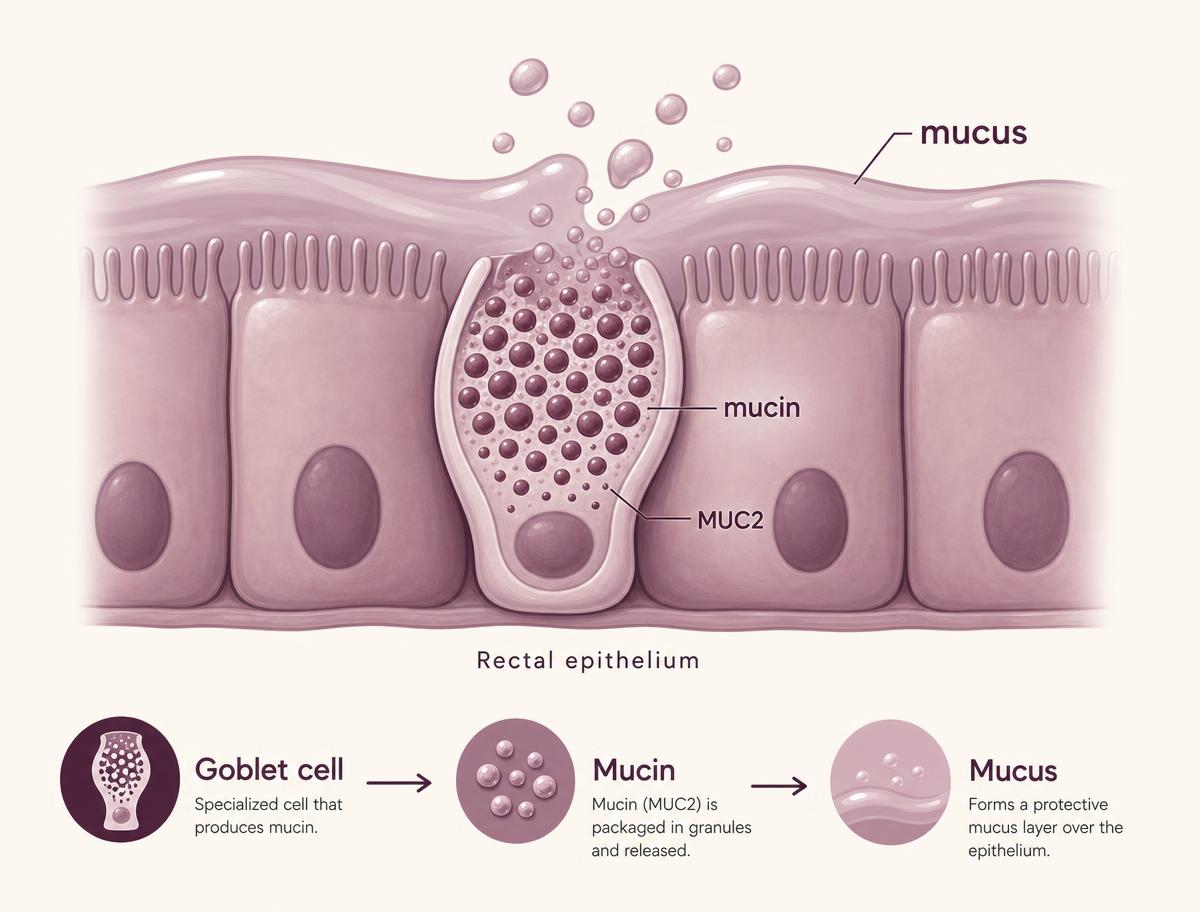
Goblet cells are specialized epithelial cells found throughout much of the gastrointestinal tract. They get their name because under a microscope they can resemble little drinking goblets.
And their main claim to fame? They make mucus.
Your colon and rectum contain plenty of them. Goblet cells manufacture specialized proteins called mucins, which become major structural components of mucus.
In the colon and rectum, one especially important mucin is called MUC2 — a major gel-forming mucin responsible for helping create the protective colorectal mucus barrier.
Don't worry. There will not be a MUC2 exam at the end.
Just remember: goblet cell → mucin → mucus.
But Mucus Is More Complicated Than Slime
When people hear “mucus,” they usually think about what comes out of their nose when they're sick. Gastrointestinal mucus is much more interesting than that.
Mucins are enormous proteins covered in carbohydrate molecules. Once released from goblet cells and properly hydrated, they form large molecular networks that create the slippery, gel-like material we recognize as mucus.
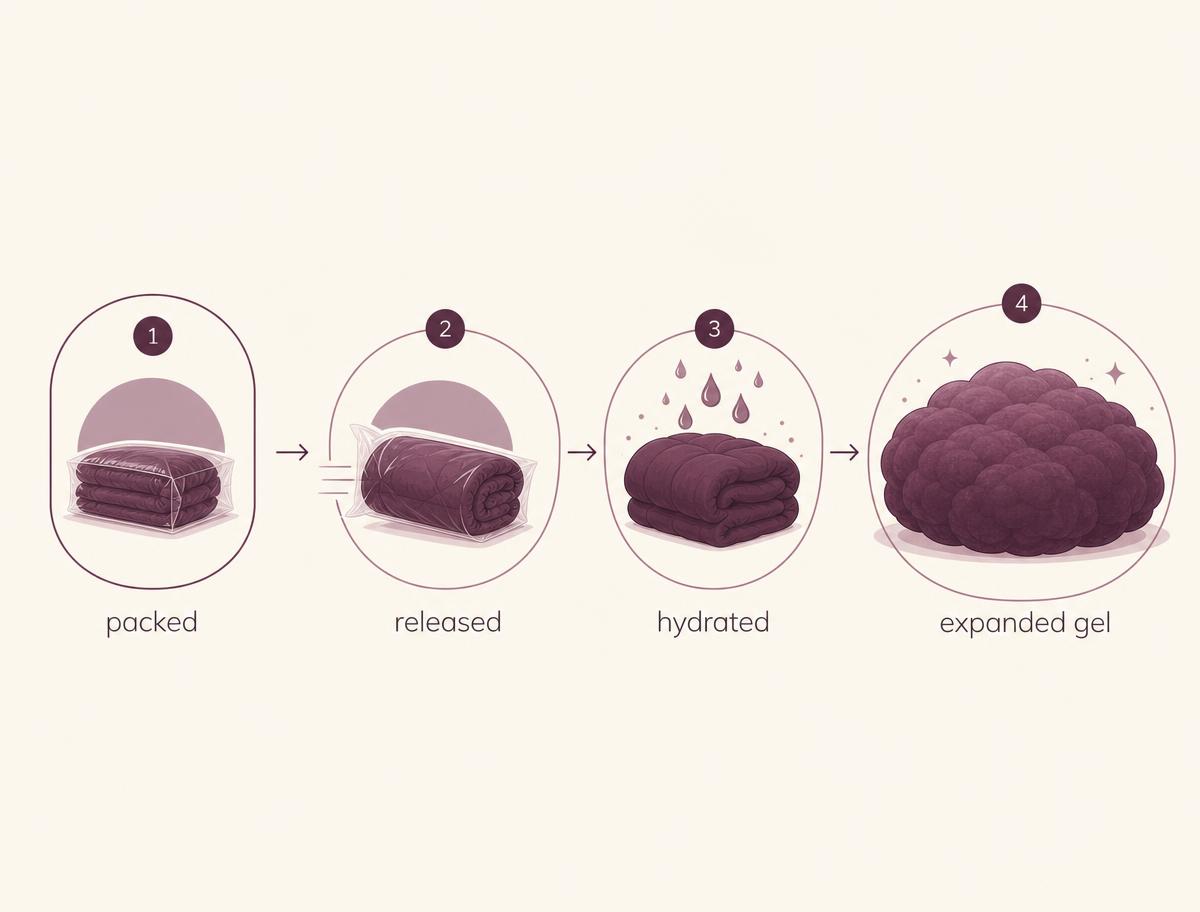
And here's a cool part. Mucin isn't stored inside a goblet cell as a giant puddle of fully expanded slime. It is densely packed into secretory granules inside the cell.
When those mucins are released and exposed to the appropriate environment, they hydrate and dramatically expand, helping form the mucus layer covering the intestinal surface.
Think of it like a vacuum-packed comforter. Inside the goblet cell, the material is compressed. Release it. Add the right conditions and water. FOOM. It expands into a much larger hydrated gel.
Your body is basically operating microscopic home-goods-store equipment inside your rectum. Science is beautiful.
Your Rectum Is Already Covered in Mucus
Here's one of the biggest misconceptions about creaming: your rectum doesn't suddenly discover mucus because you're having sex. Mucus is already there.
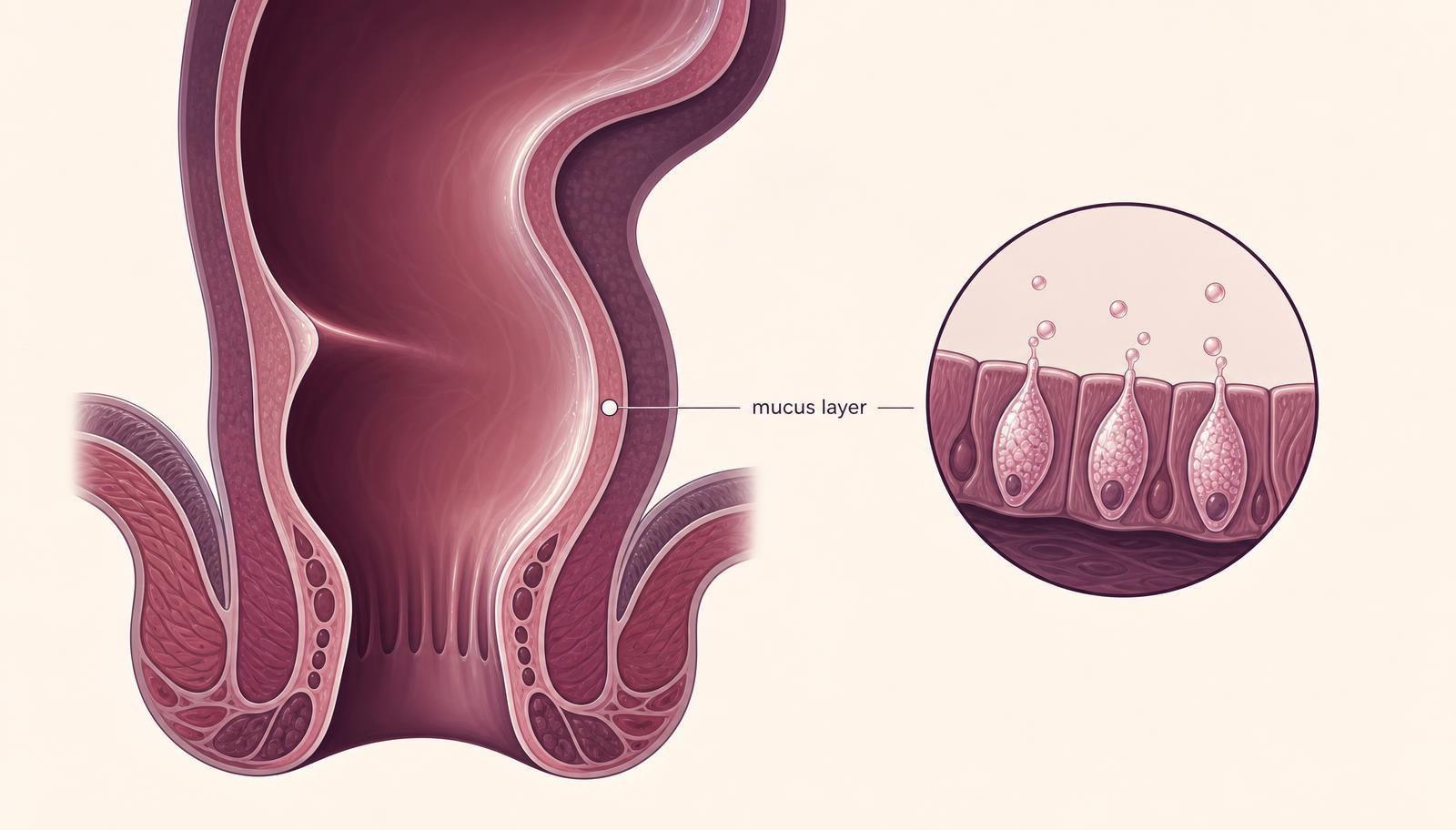
Healthy colorectal tissue maintains a mucus barrier covering its epithelial surface. Research using human tissue has demonstrated an adherent mucus layer over normal rectal tissue.
The colon's mucus system is often described as having a denser inner layer close to epithelial cells and a looser, more hydrated outer layer toward intestinal contents. MUC2 plays a major role in forming this system.
And your body continuously maintains and renews that mucus. That means mucus production isn't some weird sexual trick. It's happening while you're working. While you're sleeping. While you're watching Netflix. While you're arguing with strangers on Facebook.
The mucus system was already on duty before anybody took their pants off.
So Why Does the Rectum Make Mucus?
Sex isn't the main reason.
Your digestive tract deals with a challenging environment. There are:
- bacteria
- stool
- digestive products
- potential irritants
- friction
- mechanical forces
Directly underneath all of that is delicate living tissue. Mucus helps form an important protective barrier between intestinal contents and the epithelial cells lining your gut, and helps separate much of the intestinal microbiota from the underlying tissue.
Mucus also helps reduce friction and facilitates movement of material through the gastrointestinal tract.
There's Another Player: Your Anal Glands
Goblet cells aren't the only secretory structures in the neighborhood. The anal canal also contains structures known as anal glands.
These small glands are associated with the anal crypt region and can extend into nearby tissues. Microscopic examination of human anal glands has demonstrated mucus-secreting cells and secretions within the gland spaces.
So potentially, there are multiple sources of endogenous mucus or mucus-like secretions around the anorectal area. That's important. The explanation isn't simply “rectal goblet cells make anal lube.” That's much too simplistic.
There is an entire anorectal secretory environment down there.
So…Is Creaming Just Rectal Mucus?
Not necessarily. And this is probably one of the most important things to understand from Part 1.
Imagine receptive anal sex happening with lubricant. The rectum already contains mucus. More lubricant is being introduced. Maybe semen eventually enters the rectum. Maybe saliva was used. Maybe the person douched earlier and a small amount of water remains.
Those substances can mix together. Then movement incorporates everything. The result might be clear, cloudy, slippery, whitish, thicker, thinner, or stringy.
And what you see externally doesn't necessarily tell you which component came from where.
So somebody might look down and say: “Baby, I creamed everywhere.” Okay! But scientifically, we can't look at that fluid and automatically declare, “yep, that's 100% freshly secreted rectal mucus.”
Without actually analyzing the fluid, we don't know its precise composition. That doesn't mean the experience isn't real. It means we're being careful about the explanation.
But Can Rectal Mucus Actually Lubricate?
Now we're getting somewhere. Mucus absolutely has lubricating properties. That's part of its normal physiological role: it helps reduce friction and allows material to move across epithelial surfaces while also helping protect those surfaces.
So calling rectal mucus slippery, or saying that it can contribute to lubrication, is reasonable. But there is a major difference between saying “rectal mucus has lubricating properties” and “your rectum naturally produces enough sexual lubricant for anal intercourse.”
Those are not the same scientific claim. We have good evidence supporting the first. We currently do not have strong human clinical evidence establishing that endogenous rectal mucus reliably provides enough lubrication for comfortable receptive anal intercourse.
So even if you're a champion creamer…
🍑 KEEP THE LUBE.
Okay, Then Why Do Some Bottoms Seem to Cream More?
THAT is the question. And we're not answering it completely today.
Because once we move from “does the rectum produce mucus?” to “can penetration make the rectum release more mucus?” we have entered another area of physiology.
Goblet cells don't necessarily release mucus at one perfectly constant rate. Intestinal mucus secretion can respond to various biological, chemical, neural and mechanical signals. Scientists have investigated how goblet cells respond to:
- mechanical forces
- pressure
- stretching
- neural signaling
- chemical messengers
- other stimuli
Which raises a fascinating possibility: could pressure, movement, stretching or prolonged stimulation contribute to how much mucus someone notices during anal sex?
Biologically? Very interesting. Scientifically proven specifically in people having anal sex? That's where things get murkier. And that's exactly what we're tackling in Creaming Part 2.
When “Creaming” May Actually Be a Symptom
Normal rectal mucus exists. But not every substance coming from the rectum should automatically be labeled creaming.
So…Where Does Creaming Come From?
Strong or good evidence: WE KNOW: your rectum naturally produces mucus
Specialized goblet cells within colorectal mucosa produce mucins—including MUC2—that help form the protective mucus barrier covering the intestinal lining.
Strong or good evidence: WE KNOW: mucus protects and reduces friction
That mucus helps protect the intestinal lining and reduce friction as material moves through the gastrointestinal tract.
Strong or good evidence: WE KNOW: the anal region has other secretory structures
The anal canal contains anal glands with mucus-secreting cells, so goblet cells aren't the only possible source.
Strong or good evidence: WE KNOW: mucus is already there
Mucus is present before sexual activity begins. It is continuously maintained and renewed.
Some evidence — use thoughtfully: IT'S COMPLICATED: what's actually in that fluid
The fluid somebody identifies as “creaming” during sex may contain endogenous mucus mixed with lubricant, semen, saliva, residual water, or other material.
Some evidence — use thoughtfully: WE'RE INVESTIGATING: does stimulation increase secretion?
Mechanical stimulation may influence mucus secretion. But translating gastrointestinal physiology into exactly what occurs during receptive anal intercourse requires much more careful examination.
Evidence weaker than its reputation: WE CANNOT SAY: that creaming is pure rectal mucus
We cannot say that every person who creams is producing large quantities of pure rectal mucus.
Evidence weaker than its reputation: AND PLEASE DON'T SAY: “I cream, therefore I don't need lube”
Absolutely not. Lubricant still reduces friction, and creaming does not establish that your body is producing enough of it.
🍑 The Bottom Line
Creaming is real as an experience.
There is also legitimate anatomy and physiology that can help explain why wetness may originate from inside the anorectal tract. Your rectum contains mucus-producing goblet cells. Those cells manufacture mucins that help form a continuously maintained protective mucus barrier. The anal canal also contains secretory structures capable of contributing mucus.
That mucus is slippery. It protects tissue. It helps reduce friction. And some of it may contribute to what people experience as creaming during anal sex.
But there's still a major unanswered question: can anal stimulation actually make your body release more of it? Pressure? Stretching? Movement? Nerves? Chemical signals? All of the above?
That's where Creaming Part 2 begins. And baby…now we're getting into the good stuff.
When to Seek Medical Care
Rectal mucus is normal. Contact a healthcare professional if you notice:
- significant rectal pain
- persistent bleeding
- pus-like discharge
- sores around the anus
- fever
- painful bowel movements
- substantial new urgency
- persistent unexplained discharge
Some sexually transmitted infections and inflammatory conditions can cause proctitis and rectal discharge. Evaluation is how you find out—guessing is not.
Frequently Asked Questions
References & Further Reading
Scientific literature supporting this article's discussion of anorectal anatomy, colorectal epithelium, goblet cells, MUC2, the colorectal mucus barrier and anal glands.
- 1.Barleben A, Mills S. Anorectal anatomy and physiology. Surgical Clinics of North America. 2009;89(1):1-15. Anorectal anatomy and physiology (PubMed)
- 2.Kim JH, et al. Essential Anatomy of the Anorectum for Colorectal Surgeons Focused on the Gross Anatomy and Histologic Findings. Annals of Coloproctology. Essential anatomy of the anorectum (PMC)
- 3.Johansson MEV, et al. The two mucus layers of colon are organized by the MUC2 mucin. Proceedings of the National Academy of Sciences. The two mucus layers of colon (PubMed)
- 4.Johansson MEV, Hansson GC. Mucus and the goblet cell. Mucus and the goblet cell (PubMed)
- 5.Research on the adherent mucus layer over human rectal tissue. Human rectal mucus-layer research (PubMed)
- 6.Histology and secretory activity of human anal glands. Human anal gland histology (PubMed)
- 7.Inspiration & Additional Reading — The PULSE Clinic “Ass Juice” series was an important inspiration for investigating this topic and making anorectal mucus physiology accessible within sexual-health education. This article independently examines and expands on those questions using anatomical and scientific literature. Part 1: The Anatomy & Biology of Ass Juice. PULSE Clinic — Part 1
- 8.Inspiration & Additional Reading — PULSE Clinic, Part 2: How to Stimulate the Release of Ass Juice? PULSE Clinic — Part 2
- 9.Inspiration & Additional Reading — PULSE Clinic, Part 3: When the Bottom Self-Lubricated. PULSE Clinic — Part 3
- 10.Inspiration & Additional Reading — PULSE Clinic, Part 4: Getting to Know Acetylcholine. PULSE Clinic — Part 4
The Anal Coach is an independent educational work. PULSE Clinic is credited as inspiration and further reading only; no wording, graphics or page structure has been reproduced.