
On this page
The Bottom Line
The anorectal system is considerably more sophisticated than its reputation suggests.
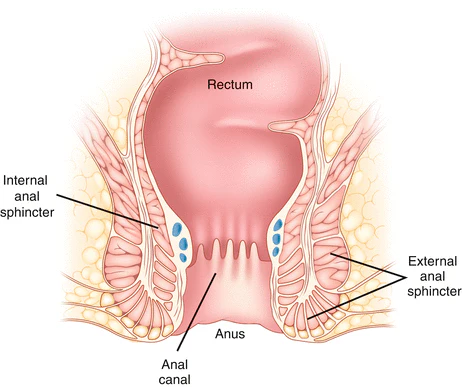
Bowel control and defecation require coordination between:
- The rectum
- Anal canal
- Internal anal sphincter
- External anal sphincter
- Puborectalis muscle
- Pelvic floor
- Sensory nerves
- Spinal cord
- Brain
Yes, your brain and your butt are texting each other all day.
Fortunately, most of those messages remain private.
Key Facts
- The rectum temporarily stores stool before a bowel movement.
- The internal anal sphincter is mostly involuntary smooth muscle. You don't consciously control every contraction.
- The external anal sphincter is skeletal muscle and provides more voluntary control.
- The puborectalis helps create the anorectal angle important for continence.
- The pelvic floor supports pelvic organs and participates in continence, bowel emptying, and sexual function.
- Sensory nerves help distinguish pressure, gas, stool, discomfort, and other sensations.
“How Do I Know I Have to Poop?”
As stool enters and stretches the rectum, sensory signals travel through nervous-system pathways.
Your brain receives information that something has arrived.
It then participates in perhaps one of adulthood's most universal calculations:
“Can I wait, or do I need to find a bathroom immediately?”
Your sphincters and pelvic-floor muscles help make that decision physically possible.
Why Can Things Go Wrong?
Problems can develop from:
- Muscle injury
- Nerve injury
- Chronic constipation
- Pelvic-floor dysfunction
- Surgery
- Radiation
- Neurologic disease
- Childbirth-related injury
- Inflammatory disease
- Trauma
The system requires coordination.
Sometimes a bowel problem isn't because the muscles are “weak.” They may actually be contracting when they're supposed to relax.
Prevention / Maintaining Function
General anorectal health includes:
- Healthy bowel habits
- Avoiding chronic straining
- Treating constipation
- Addressing chronic diarrhea
- Seeking evaluation for persistent continence problems
- Addressing pelvic-floor symptoms
- Avoiding unnecessary trauma
Treatment Overview
When anorectal function isn't working correctly, testing may include examination, anorectal manometry, imaging, endoscopy, defecography, or other specialized assessments.
Treatment can include bowel-habit changes, medication, pelvic-floor therapy, biofeedback, procedures, surgery, or neuromodulation depending on the diagnosis.
When to Seek Medical Care
Talk with a healthcare professional about:
- New fecal incontinence
- Persistent constipation
- Difficulty evacuating stool
- Persistent rectal pain
- Significant bleeding
- New loss of sensation
- New pelvic-floor symptoms
Frequently Asked Questions
Scholarly Sources & References
- 1.Dickstein DR, Edwards CR, Rowan CR, et al. Pleasurable and problematic receptive anal intercourse and diseases of the colon, rectum and anus. Nature Reviews Gastroenterology & Hepatology. 2024;21(6):377-405. doi:10.1038/s41575-024-00932-1
- 2.Yan Y, Inal B, Kapavarapu P, Alber K, Rao SSC. Novel Concepts on the Functional Neuroanatomy of the Anorectum: Implications for Anorectal Neuropathy and Neuromodulation Therapy. American Journal of Gastroenterology. doi:10.14309/ajg.0000000000003221
- 3.DeLancey JOL, Mastrovito S, Masteling M, et al. A unified pelvic floor conceptual model for studying morphological changes with prolapse, age, and parity. American Journal of Obstetrics & Gynecology. 2024;230(5):476-484.e2. doi:10.1016/j.ajog.2023.11.1247
Modern neuroanatomy literature describes coordinated signaling among the rectum, spinal cord, brain, sphincters, and pelvic floor rather than bowel control being the work of a single muscle.