
On this page
- The Bottom Line
- Key Facts
- Why This Conversation Matters
- So, What Age Should Screening Begin?
- What Does a Prostate Screening Visit Actually Include?
- Preparing Mentally: Replace the Movie in Your Head With Facts
- Preparing Emotionally: Name the Fear Without Letting It Drive
- Preparing Physically: Keep It Simple
- Preparing Spiritually: Let Care Be an Act of Stewardship
- What Happens During a Digital Rectal Exam?
- If the PSA Is Elevated, Do Not Panic
- Your Grown-Man Appointment Checklist
- The Bottom Line for the Fellas
- When to Seek Medical Care
- Research & references
The Bottom Line
Forty brings a few surprises: reading menus from farther away, making a sound when you stand up, and hearing your healthcare provider use the words “prostate screening” with your name attached.
For many men, the first thought is immediate: “Wait—is this the finger exam?”
Maybe. But not necessarily.
Let’s say that again in plain language: screening usually starts with a conversation about your personal risk and a prostate-specific antigen, or PSA, blood test. A digital rectal exam may be offered as an additional tool, but it should not be automatic, unexplained, or a surprise attack from behind.
So take a breath. This is not about losing your dignity, masculinity, or membership in the Fellas Association. It is about knowing your risk, making an informed decision, and staying alive long enough to become the well-seasoned elder who gives unsolicited advice at every family function.
Key Facts
- Screening usually begins with a risk conversation and a PSA blood test — not automatically a digital rectal exam.
- About 1 in 8 men will be diagnosed with prostate cancer during his lifetime.
- Black men are more likely to develop prostate cancer, are often diagnosed younger, and have roughly twice the prostate cancer death rate of White men.
- A father, brother, or son diagnosed young — and certain inherited variants including BRCA1 and especially BRCA2 — can raise risk.
- A PSA test cannot diagnose cancer by itself, and an elevated result is not a diagnosis.
- Screening is for people without symptoms. Symptoms deserve evaluation now, not at a screening birthday.
Why This Conversation Matters
The American Cancer Society estimates that approximately 333,830 people in the United States will be diagnosed with prostate cancer in 2026, and about 36,320 will die from it. About 1 in 8 men will be diagnosed during his lifetime.
The risk is not distributed equally. Black men are more likely to develop prostate cancer, tend to be diagnosed at younger ages, and have roughly twice the prostate cancer death rate of White men.
Family history matters, too—especially if a father, brother, or son developed prostate cancer at a younger age. Certain inherited gene variants, including BRCA1 and particularly BRCA2, may also increase risk.
This information is not meant to frighten you. It is meant to help you start the conversation at the right time.
So, What Age Should Screening Begin?
There is no single birthday that works for everyone, and major medical organizations do not all use the same starting age.
Current American Urological Association and Society of Urologic Oncology guidance says clinicians may offer a baseline PSA test between ages 45 and 50. Screening should be offered between ages 40 and 45 to people at increased risk because of Black ancestry, certain inherited gene mutations, or a strong family history of prostate cancer.
The American Cancer Society recommends having the informed-decision conversation at:
| Age | Who |
|---|---|
| 50 | Men at average risk who are expected to live at least 10 more years. |
| 45 | Black men, and men whose father or brother was diagnosed before age 65. |
| 40 | Men with more than one first-degree relative diagnosed at an early age. |
Scroll the table horizontally to see all columns.
The U.S. Preventive Services Task Force recommends an individual decision about PSA screening for men ages 55 to 69 after discussing the benefits and possible harms with a clinician. It recommends against routine PSA screening at age 70 and older.
In plain English: if you are over 40—especially if you are Black or prostate cancer runs in your family—it is time to know your risk and ask when screening makes sense for you.
Screening is a decision, not a conveyor belt.
What Does a Prostate Screening Visit Actually Include?
1. A risk conversation
Your clinician should ask about your age, race or ancestry, family history, overall health, urinary symptoms, medications, and any known inherited cancer-related gene variants.
This is also your opportunity to ask about the benefits, limitations, and possible next steps of screening.
2. A PSA blood test
PSA is a protein produced by both normal and abnormal prostate cells.
A higher result can occur with prostate cancer, but it can also happen because of benign prostate enlargement, inflammation, infection, recent ejaculation, or certain activities and procedures.
A PSA test cannot diagnose cancer by itself.
3. Possibly, a digital rectal exam
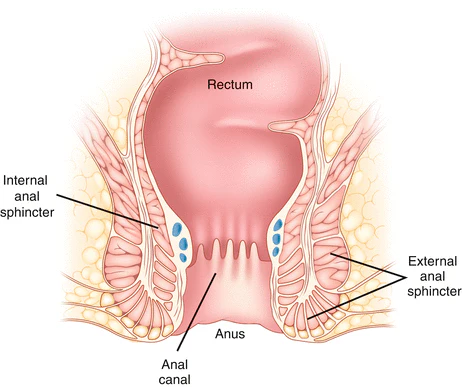
During a digital rectal exam, or DRE, a clinician places a gloved, lubricated finger into the rectum to feel the back surface of the prostate for unusual firmness, enlargement, or lumps.
It usually lasts only a short time. You may feel pressure or the urge to urinate, but it should not be sharply painful.
The DRE is less effective than PSA testing at finding prostate cancer and is generally used selectively as an additional assessment—not as a replacement for a PSA blood test.
Preparing Mentally: Replace the Movie in Your Head With Facts
Anxiety loves missing information.
If your entire understanding of a prostate exam came from a comedy scene, locker-room joke, or one dramatic uncle, your mind may be preparing for something very different from the actual visit.
Before the appointment, write down a few questions:
- Based on my age and risk factors, do you recommend screening now?
- Will today’s visit include a PSA test, a DRE, or both?
- What are the benefits and possible harms of screening for me?
- What would an elevated PSA mean?
- Would we repeat an elevated PSA before doing anything else?
- How often would I need to be screened if my result is normal?
You are allowed to ask the clinician to explain every step before it happens. Informed consent is not canceled because the procedure is brief.
Preparing Emotionally: Name the Fear Without Letting It Drive
Some men fear pain. Some fear embarrassment. Some worry that a rectal exam somehow challenges their masculinity or says something about their sexual orientation.
It does not.
A medical exam is a medical exam. Your prostate does not issue identity cards.
If you have a history of sexual trauma, a painful anorectal condition, or a prior negative medical experience, tell the clinician before the exam.
You do not have to pretend you are relaxed. You only need enough trust and control to participate in your care.
Preparing Physically: Keep It Simple
For a routine digital rectal exam, special bowel preparation is generally not required.
You do not need to fast, take a laxative, or douche unless your healthcare provider gives you a specific medical instruction. Normal bathing is enough. If it would make you more comfortable, use the bathroom before the visit.
Tell your clinician beforehand if you have:
- Hemorrhoids
- An anal fissure
- Rectal bleeding
- Significant anal or rectal pain
- Recent anorectal surgery
These conditions may make the exam more uncomfortable or require a different plan.
If you are having a PSA blood test, preparation matters because several things can temporarily affect the result. Unless your clinician tells you otherwise:
- Avoid ejaculation for 48 hours before the blood draw.
- Avoid vigorous exercise, especially cycling, for 48 hours beforehand.
- Ask whether you should avoid receptive anal sex or other prostate stimulation during that same period.
- Tell the clinician if you currently have urinary symptoms, a urinary infection, or prostatitis.
- Tell the clinician about any recent prostate biopsy or urologic procedure.
- Bring a complete medication and supplement list.
- Tell the clinician if you take finasteride, dutasteride, testosterone, or other hormone therapy.
- Do not stop a prescription medication on your own.
The goal is to help your clinician interpret the result correctly—not to freelance your healthcare the night before.
Preparing Spiritually: Let Care Be an Act of Stewardship
Spiritual preparation does not mean pretending you are not afraid. It means deciding what will help you walk into the appointment grounded.
Pray. Meditate. Sit quietly. Take slow breaths. Call someone you trust. Read a passage that reminds you that caring for your body is not weakness—it is stewardship.
“I can be nervous and still take care of myself.”
If faith is important to you, let it support appropriate medical care rather than replace it. Prayer and prevention do not have to compete; they can ride to the appointment together.
What Happens During a Digital Rectal Exam?
If you and your clinician decide a DRE is appropriate, you will usually undress from the waist down in private and be given a drape.
You may lie on your side with your knees bent or stand and lean forward, depending on the setting and your comfort.
The clinician should explain what is about to happen, inspect the area, apply lubricant to a gloved finger, and insert it gently into the rectum. They will feel the prostate through the rectal wall.
Slow breathing and relaxing the pelvic muscles can reduce discomfort.
The exam is brief. It may be awkward. Awkward is survivable.
If the PSA Is Elevated, Do Not Panic
An elevated PSA is not a prostate cancer diagnosis.
PSA can rise for several noncancerous reasons, and there is no single number that proves whether cancer is present or absent.
For someone without symptoms who has a newly elevated PSA, the next step is often to repeat the test after an appropriate waiting period before moving to imaging, additional blood or urine tests, a urology referral, or a biopsy.
Your clinician should consider your age, health, family history, examination findings, PSA pattern, and preferences before recommending the next step.
One abnormal number is information—not a verdict.
Your Grown-Man Appointment Checklist
Before you go, make sure you can answer these questions:
The Bottom Line for the Fellas
Fellas, being over 40 does not mean everyone needs the same test tomorrow. It does mean we should stop allowing fear, embarrassment, and misinformation to make healthcare decisions for us.
Taking care of your backside includes more than what happens at the entrance.
Know your family history. Know your risk. Ask about PSA screening. Give consent deliberately.
And if a digital rectal exam is recommended, remember: a few awkward seconds are not more powerful than your long-term health.
Make the appointment. Take the deep breath. Ask the grown-man questions.
Your prostate may be private—but your health is worth protecting.
When to Seek Medical Care
Screening is intended for people without symptoms. Do not wait for a screening birthday if you have concerns such as:
- Blood in your urine or semen.
- Painful, frequent, or difficult urination.
- A weak or interrupted urine stream.
- Persistent pelvic, hip, or back pain.
- New erectile or ejaculation problems.
These symptoms can have many causes other than cancer, but they deserve evaluation.
Frequently Asked Questions
Sources and Further Reading
- 1.American Cancer Society. Key Statistics for Prostate Cancer. American Cancer Society — Key Statistics
- 2.Lin DW, Carlsson S, Filson CP, et al. Updates to Early Detection of Prostate Cancer: AUA/SUO Guideline (2026). PubMed — AUA/SUO Guideline update
- 3.Wei JT, Barocas DA, Carlsson S, et al. Early Detection of Prostate Cancer: AUA/SUO Guideline Part I. PMC — AUA/SUO Guideline Part I
- 4.American Cancer Society. Recommendations for Prostate Cancer Early Detection. American Cancer Society — Early detection recommendations
- 5.National Cancer Institute. Prostate-Specific Antigen (PSA) Test. National Cancer Institute — PSA test
- 6.U.S. Preventive Services Task Force. Prostate Cancer: Screening. USPSTF — Prostate cancer screening
- 7.American Cancer Society. Screening Tests for Prostate Cancer. American Cancer Society — Screening tests